Tedaarik · 2025
Shaping Positioning for a Pre-Launch Product
A pre-launch waitlist landing page and founder/CEO support for an AI procurement startup
Positioning + IA · Founder support
Read the detailed article →01 Status
Pre-launch founder support: landing page and positioning
Pre-launch founder/CEO support work completed. The main artifact was the pre-launch waitlist landing page structure and positioning direction. There is no verified launch, waitlist conversion, revenue, user acquisition, funding closed, PMF, or customer adoption claim.
02 What I Shaped
Tedaarik was an AI-powered procurement and supply chain startup preparing for launch. I supported the founder and CEO in early product and GTM work.
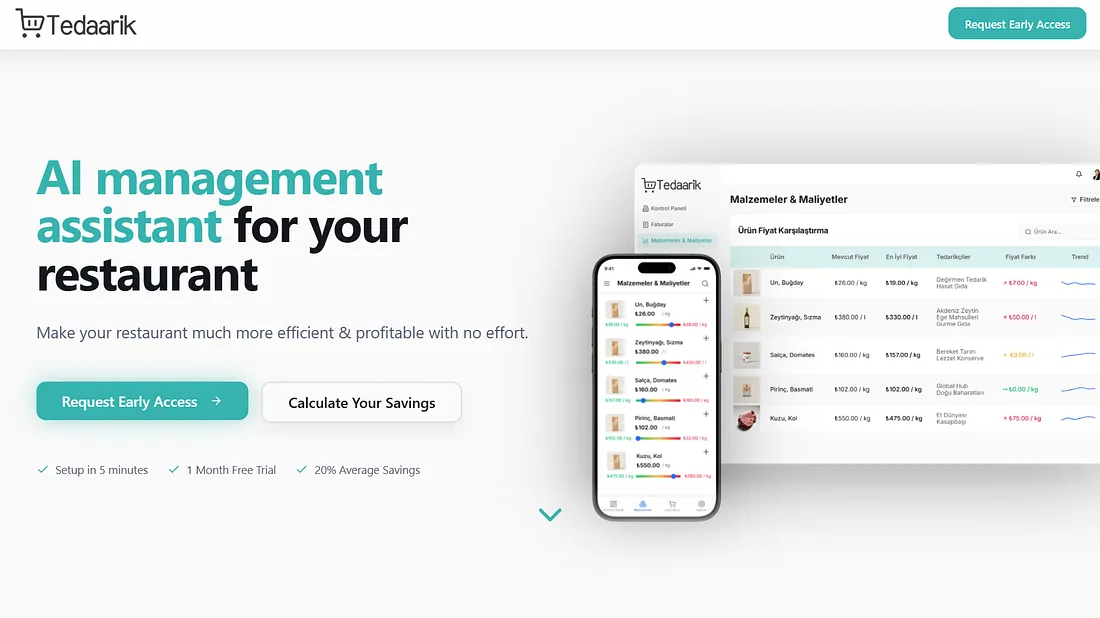
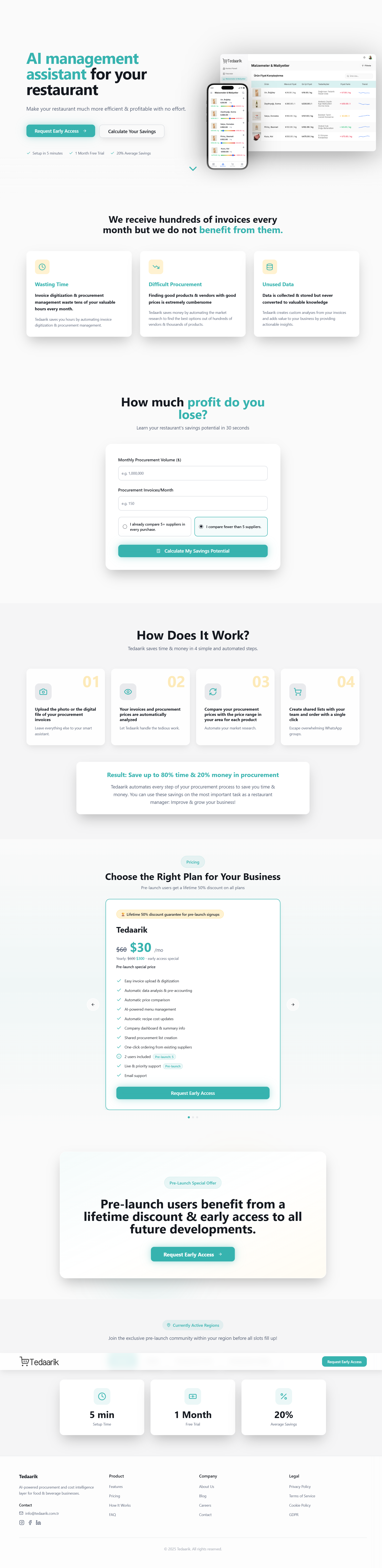
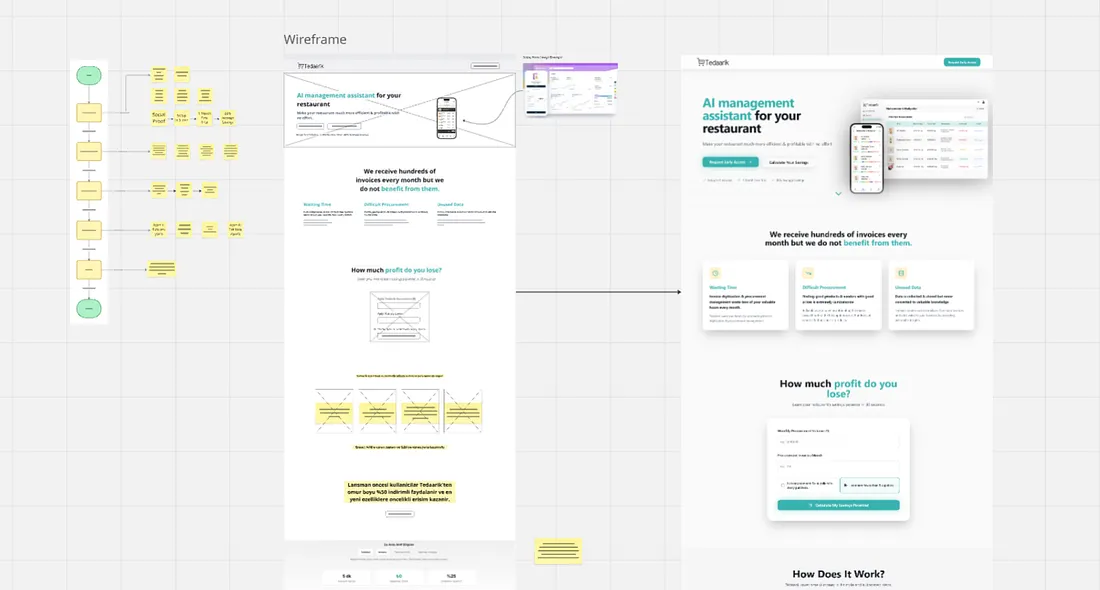
The largest workstream was the pre-launch waitlist landing page: strategy, information architecture, UX flow, and benefit-driven copy direction for a non-technical audience.
This case proves early-stage operating context, landing page execution, and founder support, not traction, fundraising, or product launch.
03 Problem
The challenge was to make an early-stage product understandable and credible to a non-technical, ROI-driven audience before launch.
The landing page needed to communicate who the product was for, what pain it solved, why users should care, and what action they should take, without relying on proven outcomes or technical depth to do the convincing.
04 My Role
- Founder / CEO supportWorked close to the founder on early product and GTM direction.
- Landing page strategyResearched SaaS landing page examples, conversion-focused design principles, and UX resources.
- Information architectureStructured the page as: Hero, Benefits, How It Works, Pricing, Last CTA, Footer.
- Copy directionUsed benefit-driven language instead of feature-heavy copy, reducing technical terminology for a non-technical audience.
05 Key Decisions
- One primary actionFocused the entire page on a single goal: early access / waitlist sign-up.
- Benefits, not featuresAvoided technical and product-heavy storytelling; framed everything as outcomes and savings.
- Customer as heroFramed the user's pain and savings first; the product came second.

06 The Landing Page
07 What This Proves
- Founder operating rangeI can support founders through ambiguity, without a finished product or defined spec.
- Positioning clarityI can turn product and GTM ambiguity into a clear external-facing landing page narrative.
- Landing page structureI can structure landing pages around user action, benefits, and objection reduction.
- Non-technical communicationI can communicate product value to non-technical, ROI-driven users without relying on feature depth.
If you are pre-launch and need the story straight before the product is finished.